Further reading
On Coptipedia, the Coptic encyclopedia (in French)
Certificate of authenticity
Delivered with your artwork
Your hand-painted icon comes with a certificate of authenticity signed by Armia Elkatcha. It identifies your artwork, its dimensions, its number and its completion date.
- Artist
- Armia Elkatcha
- Artwork
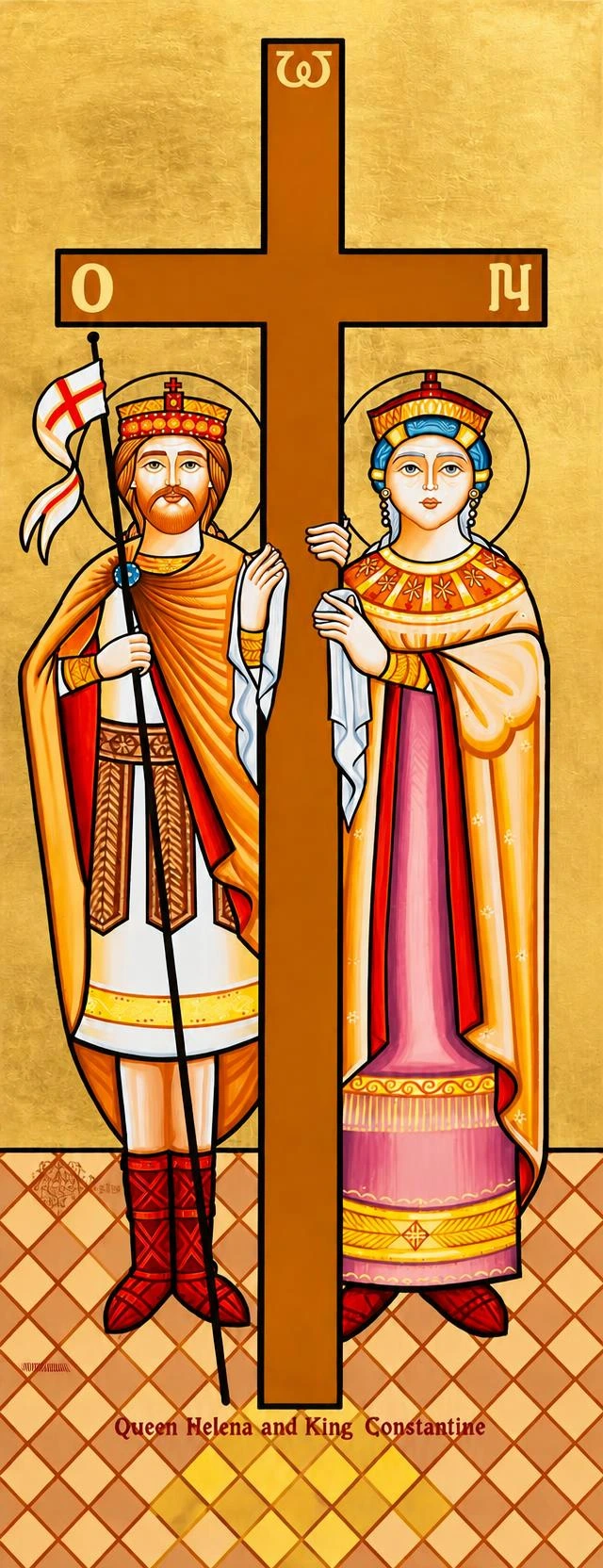
- Saint Helena and Saint Constantine with the Cross
- Dimensions
- 90 × 130 cm
- Certificate number
- Assigned to your completed artwork
- Completion date
- Recorded upon completion
Armia Elkatcha’s signature
Signed by the artist on the certificate delivered with the artwork
Apostles, martyrs and saints
Saint Helena and Saint Constantine with the Cross
Unique and personalised icon by Armia Elkatcha Size of your choice. Please note: the smaller the icon, the less detail the artist can include. The photo shows the XL size
Prices include French VAT at 5.5%
Hand-painted on request · Delivered in 2 to 4 months · Free delivery
Emperor Constantine and his mother, Empress Helena, stand on either side of the Cross of Christ. Before the battle of the Milvian Bridge (312), Constantine saw the sign of the cross in the sky with the words “In this sign you will conquer”. As the first Christian emperor, he gave peace to the Church (313) and convened the Council of Nicaea (325). Around 326, Saint Helena travelled to Jerusalem and found the Cross of the Lord there. The Coptic Church celebrates this finding on 17 Tout (27 September) and 10 Baramhat (19 March).
References: Galatians 6:14; 1 Corinthians 1:18; John 19:17-18.
Studio journal
From preparing the support to the final details: the usual stages of a hand-painted icon.
Prepare the wood
The wooden support is prepared to receive the drawing, gold leaf and paint.
Draw the composition
The scene, figures and symbols are arranged according to the chosen representation and size.
Apply the gold leaf
Gilding brings light to the background and halos, in the tradition of the Coptic icon.
Paint the icon
Colours, garments and faces are painted by hand. The level of detail is adapted to the size of the artwork.
Finish and authenticate
The final details and finishing touches are completed. The artist signs the certificate bearing the artwork’s number and date.